
BREAKING NEWS

BREAKING NEWS

Articles

Articles, Government, White House

Languid economic sentiment mirrors ‘92 pre-Clinton doldrums, could turn around in time for midterms

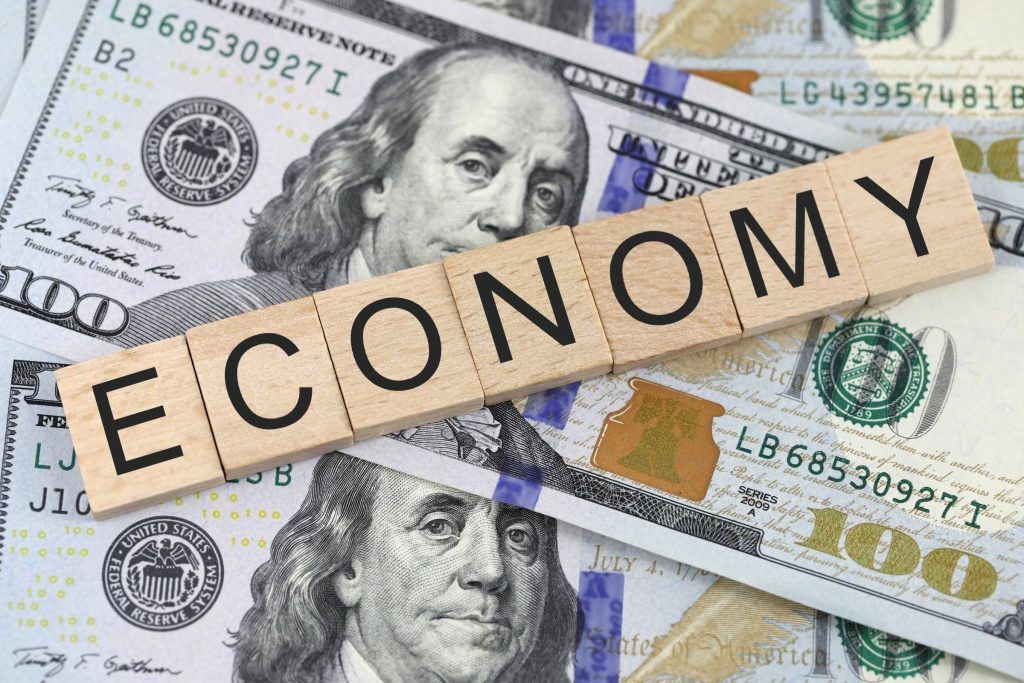
Articles / Government / White House Languid economic sentiment mirrors ‘92 pre-Clinton doldrums, could turn around in time for midterms If economic sentiment catches up to improving indexes by next spring, that will put Republicans in a strong position to keep majorities in both the House and the Senate. By: Recent polling from Napolitan News Service reveals less-than-thrilling economic sentiment heading into the holidays. The study, published on Wednesday, reports that only 26% of voters say their finances are improving with another 36% saying their finances are getting worse. The ratio was similar two weeks ago when 25% said their finances were getting better, while 39% said it was getting worse. Napolitan reports that this is the most pessimistic voters have been since before the 2024 election, when 25% said their finances were getting better and 41% said worse. Six month window Founder of Napolitan, Scott Rasmussen, told Just the News, “The single most important political indicator for any election is how people feel about their personal finances. If people are this pessimistic on Election Day next year, the Democrats will win the House handily and have a serious chance of winning the Senate.” “So what happens to the economy in the six months will define the midterm elections.” In the lead-up to the 1992 presidential election, the U.S. economy was emerging from a mild recession that began in July 1990 and officially ended in March 1991, with real GDP growth resuming at a sluggish pace of about 2.7% for the year. Despite this technical recovery, unemployment climbed to 7.5% by mid-1992, the highest in eight years, fueling perceptions of a “jobless recovery” where productivity gains outpaced job creation. This disconnect between macroeconomic indicators and voters’ pocketbook realities contributed significantly to President George H.W. Bush’s defeat, as challenger Bill Clinton capitalized on widespread frustration with stagnant wages and rising poverty rates near 15%. As of December 2025, the U.S. economy mirrors aspects of that 1992 lag, with real GDP surging 3.8% annualized in Q2 and an estimated 3.9% in Q3, yet consumer sentiment remains subdued below the neutral 50 mark on the Economic Optimism Index at 47.9. Unemployment has ticked up to 4.4% in September, the highest since late 2021, while headline CPI inflation holds at 3.0% year-over-year, squeezing household budgets amid a 43-day government shutdown’s lingering effects. Feeling the pinch Personal consumption expenditures grew robustly at 2.8% annualized in early Q3, but high-income households are driving the gains, leaving many middle- and lower-income voters feeling the pinch from tariff-induced price hikes in groceries and apparel without corresponding wage relief. If economic improvements accelerate into early 2026 as forecast  — with GDP growth projected at 1.9% for the year and unemployment stabilizing around 4.5% — voters could start feeling tangible benefits like moderated inflation to 3.2% and steadier job gains just as midterm campaigns intensify. This timely “kitchen table” boost might bolster congressional incumbents’ prospects, akin to how delayed recovery perceptions doomed Bush in 1992, potentially shifting voter turnout and priorities toward optimism over frustration. However, persistent uncertainties from policy volatility and uneven spending could still amplify turnout among discontented demographics, making the midterms a referendum on whether indexes finally translate to wallets. TOP STORIES Languid economic sentiment mirrors ‘92 pre-Clinton doldrums, could turn around in time for midterms Another Democrat fizzle after Black Friday boycott results in record-breaking shopping Total national security shutdown: Immigration cessation has long-standing historical precedent ‘First Lady of Technology’ Melania Trump pioneers FLOTUS book with global enthusiasm White House’s full-bore approach spreads to state redistricting efforts LATEST EPISODES From No. 10 as UK’s Prime Minister to the battle over truth, Liz Truss begins new show, warns America Space Frontier Foundation’s Sean Mahoney urges Senate to confirm Isaacman, makes case for NASA to end SLS reliance US Chamber Expert details why Black Friday broke records & why the ‘We Ain’t Buying It’ boycott fizzled FLOTUS Melania Trump’s Advisor & Ad Agency CEO Marc Beckman talks AI & fostering America’s future Peace Through Strength: Victoria Coates breaks down Trump’s foreign policy legacy & what’s upcoming with Ukraine RELATED ARTICLES Languid economic sentiment mirrors ‘92 pre-Clinton doldrums, could turn around in time for midterms Another Democrat fizzle after Black Friday boycott results in record-breaking shopping Total national security shutdown: Immigration cessation has long-standing historical precedent ‘First Lady of Technology’ Melania Trump pioneers FLOTUS book with global enthusiasm White House’s full-bore approach spreads to state redistricting efforts Americans still have Bidenflation blues, despite economic improvements going into the holidays Alarming number of Americans, Democrats expect a politically violent future White House trying to sort out what Biden and Blinken ignored in Nigerian war on Christians In off-year elections, Republicans ignored major Trump wins that could’ve changed the night EPA chief says ‘the sky is the limit’ with Trump’s diplomatic deals on strategic minerals

Articles, Economy

Another Democrat fizzle after Black Friday boycott results in record-breaking shopping

Articles / Economy Another Democrat fizzle after Black Friday boycott results in record-breaking shopping Unlike Trump’s first term, when criticisms and tactics often swayed voters away from Trump and his policies, Americans are well-versed in the maneuvers of Trump’s critics, and in many cases, it’s backfiring. By: Following the government shutdown boomerang and the efforts of the now-disgraced “Seditious Six,” Democrats’ call to undermine President Donald Trump and interrupt Black Friday shopping is another “Get Trump” attempt that has fizzled. This year’s Black Friday and the following weekend produced record-breaking numbers for businesses across America, both online and in-person, much to the chagrin of Democrat-led boycott efforts like #WABIT (We Ain’t Buying It). Boycotts boomerang The WABIT campaign, backed by the Soros-funded Indivisible.org and routed to Act Blue for donations, spread online and on social media leading up to the year’s biggest shopping weekend and urged consumers to refrain from patronizing three specific businesses: Target, Home Depot and Amazon, for “colluding” with the Trump administration on a number of polices like deportations and corporate tax cuts. This year’s Black Friday sales shattered previous records, with U.S. online spending reaching an unprecedented $11.8 billion, marking a 9.1% increase from 2024 and fueled by AI-driven deal-hunting and mobile purchases that accounted for over 55% of the total. Overall retail sales for the day surged 4.1% year-over-year, blending robust e-commerce growth of 10.4% with modest in-store gains of 1.7%, as shoppers navigated economic uncertainties with value-focused buys in categories like apparel and electronics. The weekend’s momentum continued unabated, with projections for Saturday at $5.5 billion and Sunday at $5.9 billion in online sales alone, setting the stage for a record-breaking Cyber Monday peak of $14.2 billion and pushing total holiday spending toward a trillion-dollar milestone. Just The News spoke to Tom Sullivan, Senior Vice President of Small Business Policy at the U.S. Chamber of Commerce, and he stressed how boycotts of these big-box stores hurt small businesses, another unintended consequence of a liberal boycott. “When you order a grill to pick up at your local Home Depot, which is not a small business, what people don’t realize is what goes into shopping online, hitting click, purchase, and then driving your pickup truck to pick up the grill that is fully assembled and is waiting for you in the Home Depot lot. There are dozens of small businesses in that transaction, whether they’re hired directly by Home Depot or by an assembly company.” Schumer Shutdown The recent 43-day government shutdown, the longest in U.S. history, backfired on Democrats by failing to secure any concessions on Affordable Care Act subsidies, instead leaving the party battered economically and politically as public frustration mounted without clear gains. The debacle fractured the Democratic caucus when eight centrist senators defied party leadership to join Republicans in advancing a bare-bones funding bill, igniting a firestorm of infighting that pitted progressives against moderates and exposed deep rifts over strategy. Claims that Senate Minority Leader Chuck Schumer and other establishment Democrats ultimately caved to Trump’s pressure have fueled calls for Schumer’s resignation from figures like Rep. Ro Khanna and progressive groups, portraying the leadership as weak and beholden to donors rather than voters. The “Seditious Six” The “Seditious Six” —  comprised of Democratic Senators Mark Kelly and Elissa Slotkin, along with Democrat Representatives Jason Crow, Chris Deluzio, Maggie Goodlander, and Chrissy Houlahan — released a provocative video in mid-November urging U.S. military and intelligence personnel to refuse any “illegal orders” from the Trump administration, a message that critics argue directly defied lawful presidential directives on deployments for crime control and immigration enforcement. Their efforts backfired tragically when, just days later on November 26, 2025, two West Virginia National Guardsmen — 20-year-old Sarah Beckstrom, who succumbed to her injuries on Thanksgiving, and another soldier who remains critically wounded — were ambushed and shot in a targeted attack near the White House by a 29-year-old Afghan national who reportedly shouted “Allahu Akbar,” an incident widely perceived as retaliation against National Guard troops enforcing Trump’s policies. This shocking violence has unleashed a torrent of backlash against the Seditious Six, with Trump allies and social media users branding their video as inflammatory rhetoric that painted service members as complicit in supposed atrocities, effectively placing a bullseye on American troops and amplifying anti-military sentiment that may have emboldened the assailant. Epstein implications Democrats’ aggressive push to release the Epstein files, initially aimed at implicating Trump, has now ricocheted as the documents reveal deep ties between Epstein and prominent party figures like House Minority Leader, Hakeem Jeffries, D-N.Y., Stacey Plaskett, D-V.I., Larry Summers and Reid Hoffman, sparking resignations and internal probes that have shifted public scrutiny onto their own ranks. The White House seized on these revelations to launch a DOJ investigation into Democratic associations with Epstein, framing the entire episode as a partisan hoax and rallying Trump’s base while forcing Democrats into a defensive posture they had not anticipated. What began as a moral high ground for transparency has now quieted Democratic voices on the issue, with media allies dropping coverage and the party regretting the unintended spotlight on their vulnerabilities, allowing Republicans to portray them as hypocrites entangled in the very scandals they decried. TOP STORIES Another Democrat fizzle after Black Friday boycott results in record-breaking shopping Total national security shutdown: Immigration cessation has long-standing historical precedent ‘First Lady of Technology’ Melania Trump pioneers FLOTUS book with global enthusiasm White House’s full-bore approach spreads to state redistricting efforts Americans still have Bidenflation blues, despite economic improvements going into the holidays LATEST EPISODES Space Frontier Foundation’s Sean Mahoney urges Senate to confirm Isaacman, makes case for NASA to end SLS reliance US Chamber Expert details why Black Friday broke records & why the ‘We Ain’t Buying It’ boycott fizzled FLOTUS Melania Trump’s Advisor & Ad Agency CEO Marc Beckman talks AI & fostering America’s future Peace Through Strength: Victoria Coates breaks down Trump’s foreign policy legacy & what’s upcoming with Ukraine Inside Big Tech’s Power Play: Daniel Cochrane Exposes Meta’s Antitrust Battles & the Future of Digital Freedom RELATED ARTICLES Another Democrat fizzle after Black Friday boycott results in record-breaking shopping

Articles, Government, White House

Total national security shutdown: Immigration cessation has long-standing historical precedent

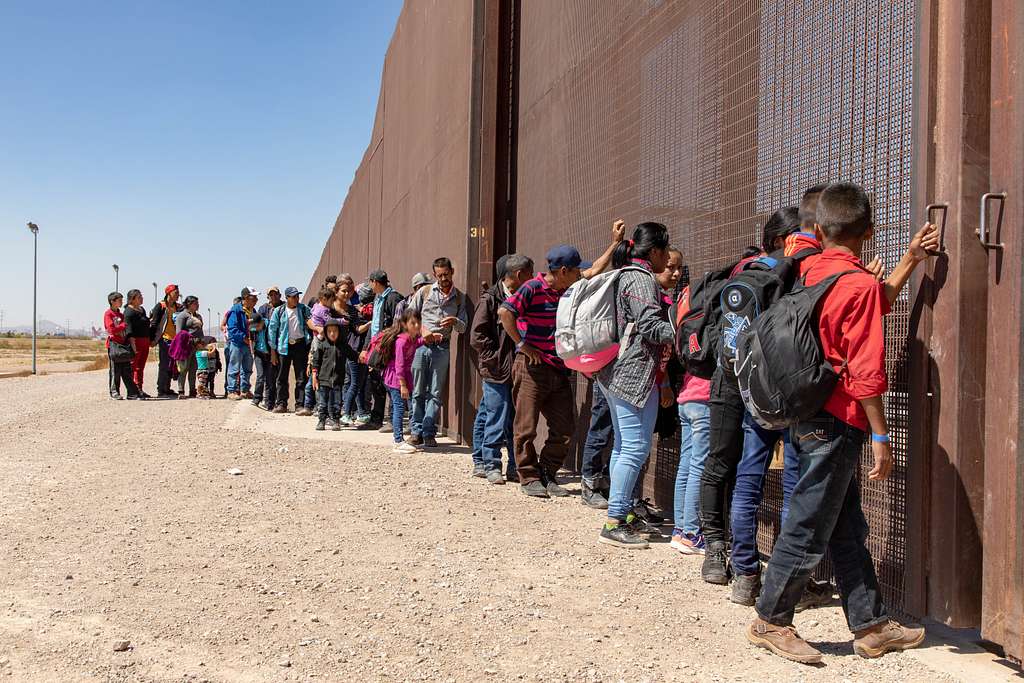
Articles / Government / White House Total national security shutdown: Immigration cessation has long-standing historical precedent In the wake of Wednesday’s shooting of two National Guard members, Trump is pushing to tighten vetting and border controls as a direct countermeasure against possible national security threats posed by migrants inadequately screened under the Biden-era protocols. By: President Donald Trump announced Thursday he intends to “permanently pause” immigration from all Third World countries and reexamine green-card holders who are not a “net asset” to the country. Trump posted on social media: “I will permanently pause migration from all Third World Countries to allow the U.S. system to fully recover, terminate all of the millions of Biden illegal admissions, including those signed by Sleepy Joe Biden’s Autopen, and remove anyone who is not a net asset to the United States, or is incapable of loving our Country, end all Federal benefits and subsidies to noncitizens of our Country, denaturalize migrants who undermine domestic tranquility, and deport any Foreign National who is a public charge, security risk, or non-compatible with Western Civilization.” The term “Third World,” in the modern sense, is a reference to poorer nations (“developing”) with a Low Human Development Index (HDI). The term originated during the Cold War to describe nations not aligned with either the US (First World) or the Soviet Union (Second World). Today, it has evolved to refer to developing countries, often with economic instability, high poverty, and lower standards of living. Political correctness has guided many to prefer terms like “developing countries” or “low and lower-middle-income countries.” Long history of immigration shutdowns The total or near-total shutdown of immigration has been enforced many times throughout U.S. history during several crises, most recently in 2020 when Trump’s Proclamations 10014 and 10052, combined with a global shutdown of U.S. embassy visa services due to COVID-19, effectively stopped almost all immigrant and most temporary-worker visa entries for months. National security has been the basis of such shutdowns as long ago as in the early part of the last century. During the Great Depression and World War II, from roughly 1930 to 1945, strict application of the “likely to become a public charge” clause and wartime security rules drove legal immigration to near-zero levels without a single blanket ban. Similar de facto pauses occurred in 1918–1920 amid the Spanish flu and postwar chaos, and again in the months following the September 11, 2001, attacks when consular processing was largely suspended for security reviews. While landmark laws such as the 1921 Emergency Quota Act and the 1924 Immigration Act sharply curtailed inflows through numerical limits, the only modern instance of a formal, broad suspension explicitly pausing virtually all legal immigration channels remains the 2020 COVID-19 measures. As early as 1919, the Department of Justice deported more than 500 people, including notable anarchist Emma Goldman. Nearly 10,000 people in 70 cities were arrested on the basis of the spread of radicalism and immigration from Europe in what is called by historians “The Palmer Raids,” named after then-Attorney General A. Mitchell Palmer. Since the start of Trump’s involvement in politics in 2015, he has made illegal immigration a hallmark issue of his campaign. During his second term, deportations have been a divisive issue, separating liberals who oppose the raids and deportations and those who support the moves to decrease the illegal immigrant population. Nobody is certain about the illegal immigrant population In Charlotte and surrounding communities, ICE enforcement operations in recent weeks have left some day-labor pickup sites, apartment complex parking lots and certain shopping centers noticeably deserted during hours that were previously crowded with workers. Community members and business owners in similar affected cities, including Atlanta, Nashville and parts of suburban Chicago report the same pattern, leading many to question if the official estimates of the illegal immigrant population living in the U.S. are underestimated. The U.S. Department of Homeland Security (DHS), through its Office of Homeland Security Statistics, provides the most authoritative estimates of the illegal immigrant population. The figures are derived using the “residual method,” which subtracts the estimated number of legal immigrants from the total foreign-born non-citizen population in Census Bureau surveys like the American Community Survey (ACS), while adjusting for undercounts, deaths and emigration. Between 11 and 20 million DHS’s latest publicly available comprehensive estimate, released in April 2024, places the illegal immigrant population at 11 million as of January 1, 2022. Critics of the official estimates, including former Border Patrol chiefs, analysts at the Center for Immigration Studies and FAIR (Federation for American Immigration Reform), argue that the true unauthorized immigrant population is likely between 15 and 20 million or higher, contending that DHS and Pew figures substantially undercount recent border crossers, visa overstays, and those evading census surveys entirely. Trump concluded his Thanksgiving night social media post with a warning that said, “HAPPY THANKSGIVING TO ALL, except those that hate, steal, murder, and destroy everything that America stands for — You won’t be here for long!” TOP STORIES Total national security shutdown: Immigration cessation has long-standing historical precedent ‘First Lady of Technology’ Melania Trump pioneers FLOTUS book with global enthusiasm White House’s full-bore approach spreads to state redistricting efforts Americans still have Bidenflation blues, despite economic improvements going into the holidays Alarming number of Americans, Democrats expect a politically violent future LATEST EPISODES US Chamber Expert details why Black Friday broke records & why the ‘We Ain’t Buying It’ boycott fizzled FLOTUS Melania Trump’s Advisor & Ad Agency CEO Marc Beckman talks AI & fostering America’s future Peace Through Strength: Victoria Coates breaks down Trump’s foreign policy legacy & what’s upcoming with Ukraine Inside Big Tech’s Power Play: Daniel Cochrane Exposes Meta’s Antitrust Battles & the Future of Digital Freedom A Healthcare Revolution: Rep. Burlison’s MAHA plan blows past Obamacare, puts patients back in charge RELATED ARTICLES Total national security shutdown: Immigration cessation has long-standing historical precedent ‘First Lady of Technology’ Melania Trump pioneers FLOTUS book with global enthusiasm White House’s full-bore approach spreads to state redistricting efforts Americans still have Bidenflation blues, despite economic improvements going into the holidays Alarming number of Americans, Democrats expect a politically violent future White House trying to sort out what Biden and Blinken ignored in

Articles, Government, White House

‘First Lady of Technology’ Melania Trump pioneers FLOTUS book with global enthusiasm

Articles / Government / White House ‘First Lady of Technology’ Melania Trump pioneers FLOTUS book with global enthusiasm Considered “Not good enough” for the coastal elites who select covers for Vanity Fair or Vogue, Melania’s work resonates with hundreds of thousands who recognize the First Lady’s insight and charm. By: First Lady Melania Trump’s memoir, “Melania”, which debuted at number one on the New York Times’ Bestseller List, will soon add new languages to the groundbreaking audiobook, voiced entirely by artificial intelligence (AI). Marc Beckman, who serves as senior advisor to the First Lady, offered insight into Trump’s work on the original, physical book: “I can tell you from firsthand experience, every single part of each of those books, every word, every image, the paper stock, all of that was led by our nation’s First Lady.” The new version of the audiobook, which will be released on Cyber Monday, will be Trump’s AI-generated voice in Spanish. In the following weeks, subsequent versions in Portuguese and Hindi will follow, opening up more consumer opportunities across the world. Beckman gave insight into the Hindi version and said, “When we launched the physical book, we had this overwhelming response from India. The First Lady visited India during the first and during the first administration and she’s got a huge fan base in India. So we were getting an overwhelming amount of requests.” Direct approval and insight In May, the audiobook dropped in a way no major memoir ever had before: the entire narration—seven hours and one minute long—was performed by an artificial-intelligence replica of multilingual Melania Trump’s own voice. Released exclusively on the ElevenReader app (iOS, Android, and web) and priced at $25 for the English edition, it was created by ElevenLabs using a voice model built with Melania’s direct approval and oversight. The First Lady, who is the first major political figure to use blockchain technology and even created her own meme coin named “Melania“, has embraced technology, but also painstakingly values authenticity. Beckman told Just the News, “If she went into the studio and just read her book, it would have been one-fifth of the amount of time that it took us to build out this book with artificial intelligence. The synthetic voice of the First Lady is uncanny. It’s perfect. She worked on every single word.” “They’ll hear on the audiobook that every space, every breath, every pronunciation of every single word she perfected through the use of artificial intelligence. Months and months and months of work. It was incredible.” Best-Seller despite snubs from fashion elites The indisputably glamorous Ms. Trump appeared only once on the cover of Vogue Magazine, prior to her husband’s election to the White House. She has never appeared on the cover of Vanity Fair, whose staff purportedly threatened to quit if she was so honored. By contrast, Michelle Obama appeared on the cover of Vogue three times as First Lady, and Laura Bush was on the cover of The Ladies’ Home Journal and People among other titles. The self-titled memoir came out in October 2024 through Skyhorse Publishing and prior to its release, pre-orders reached the top of a number of Amazon‘s best-selling books lists. Landing on shelves only a month before the 2024 presidential election, the large-format hardcover mixes personal storytelling with dozens of never-before-seen family photographs and quiet reflections on her years in the public eye. The book traces her early life in Slovenia during the final decades of communist Yugoslavia, her fashion-modeling years across Europe and eventually Manhattan, and the chance encounter with Donald Trump in 1998 that she calls the pivotal moment of her life. She wrote openly about raising their son Barron, pushes back against what she describes as hurtful speculation about him, and offers small, rarely shared glimpses of life inside the White House. She announced the project herself on X with a sleek, futuristic video and the line, “I am proud to present Melania – The AI Audiobook – narrated completely by artificial intelligence in my voice. A new chapter in publishing has begun.” TOP STORIES ‘First Lady of Technology’ Melania Trump pioneers FLOTUS book with global enthusiasm White House’s full-bore approach spreads to state redistricting efforts Americans still have Bidenflation blues, despite economic improvements going into the holidays Alarming number of Americans, Democrats expect a politically violent future White House trying to sort out what Biden and Blinken ignored in Nigerian war on Christians LATEST EPISODES US Chamber Expert details why Black Friday broke records & why the ‘We Ain’t Buying It’ boycott fizzled FLOTUS Melania Trump’s Advisor & Ad Agency CEO Marc Beckman talks AI & fostering America’s future Peace Through Strength: Victoria Coates breaks down Trump’s foreign policy legacy & what’s upcoming with Ukraine Inside Big Tech’s Power Play: Daniel Cochrane Exposes Meta’s Antitrust Battles & the Future of Digital Freedom A Healthcare Revolution: Rep. Burlison’s MAHA plan blows past Obamacare, puts patients back in charge RELATED ARTICLES ‘First Lady of Technology’ Melania Trump pioneers FLOTUS book with global enthusiasm White House’s full-bore approach spreads to state redistricting efforts Americans still have Bidenflation blues, despite economic improvements going into the holidays Alarming number of Americans, Democrats expect a politically violent future White House trying to sort out what Biden and Blinken ignored in Nigerian war on Christians In off-year elections, Republicans ignored major Trump wins that could’ve changed the night EPA chief says ‘the sky is the limit’ with Trump’s diplomatic deals on strategic minerals SNAP program rife with fraud, disparity and health issues for participants, government agencies say ‘No Kings’ protesters silent when Democrats rule as monarch Democrats panic over redistricting numbers with pivotal SCOTUS decision looming

Articles, Elections, Politics & Policy

White House’s full-bore approach spreads to state redistricting efforts

Articles / Elections / Politics & Policy White House’s full-bore approach spreads to state redistricting efforts The efforts by states to redraw congressional district lines came to a head this summer during Texas’ fight that could result in five blue-leaning seats turning red. By: President Donald Trump’s aggressive governing style has made its way into state legislatures as they navigate the challenges of redistricting in their own states. Indiana is the latest state to examine its U.S. congressional district lines, aided by both Trump and Vice President JD Vance. As the battle over congressional districts is spreading across the country, red states like Indiana are looking at the way blue states have gerrymandered and believe they are not playing the same game with the same rules. “The rules are laid out a certain way, and we play by the rules. It works if all the other teams are playing by the same rules,” but if not, it’s an uneven playing field, according to Indiana Lieutenant Governor Micah Beckwith. “States like Massachusetts are a good parallel to Indiana, because we’re about the same population. We both have nine congressional seats. They’ve got about 30% Republican out in Massachusetts. We have about 30% Democrats here in Indiana, but Massachusetts has zero Republican representatives out there,” Beckwith told Furthermore with Amanda Head Podcast. “States like Illinois, California and Massachusetts are stealing our votes in Washington. I wish we could play fair, but they’re the ones who are not. So until we fight back, we’re never going to be able to have our fair voice represented in Washington.” Throughout Trump’s campaigning last year and his second term thus far, his aggressive maneuvering has enabled a number of successes, like the One Big Beautiful Bill Act and sweeping deportation efforts. That level of savagery seems to be evident in the results Beckwith hopes to see in his own state. “We have seven Republicans and two Democrats and we’re going for nine-zero,” Beckwith told Furthermore with Amanda Head Podcast. Indiana’s current congressional map contains seven Republican districts and two Democratic districts. District one, represented by Democrat Rep. Frank Mrvan, is in the northwest corner of the state, miles from Chicago’s city center. District seven in the middle of the state, surrounding Indianapolis, is also represented by a Democrat, Rep. André Carson. In October, Vance traveled to Indianapolis to privately encourage Indiana Republican legislators to support the redistricting efforts, which would inevitably add more safe GOP seats before the 2026 elections. Joined by Senator Jim Banks, R-Ind., Vance pressed the case alongside Trump, who made conference calls with Republican legislators in the state. The fight is ongoing, according to Beckwith. He told Just The News that supporters of the effort have managed to whip 21 or 22 votes, but that’s a few votes short of the 25 vote threshold, with Beckwith serving as the tie-breaking vote. Beckwith indicated that a secret vote was held in the Senate earlier this week. President Pro Tempore of the Indiana Senate, Rodric Bray, then reported that they did not have the votes to pass the measure and forewent holding an on-the-record vote. But Beckwith argues that a public vote might pass when Indianans are allowed to know how their representatives are voting. “It’s a huge slap in the face to the people of Indiana, because you’re not respecting the Constitution and the constitutional authority that the governor has to call a special session.” “There’s at least three or four that would come over if they had to put their name next to a public vote. That’s the thing that’s so shady. How do we know that these senators, if they had to come out publicly for it, wouldn’t change their tune?” Bray effectively ended the effort by saying his chamber does not have enough votes for its passage. Earlier this week, POLITICO reported that Trump invited Bray and others to a face-to-face Oval Office meeting as early as this week – in an attempt to convince them to join his redistricting effort to give the GOP an advantage in the midterm elections. Roughly 20 other states are adopting new maps or are in the process of arguing for measures to redistrict: California, Missouri, North Carolina, Ohio, Utah and Texas have approved new maps, though Utah’s and Texas’ are currently being litigated. Florida, Maryland, Virginia, Illinois, Kansas, and Nebraska are all exploring official actions, or are in the process of forming commissions to examine the issues. Alabama, Connecticut, Georgia, Louisiana, New York and Wisconsin are enduring pending litigation in their redistricting battles. This summer, all eyes were on Texas as lawmakers initiated a mid-decade congressional redistricting process following a U.S. Department of Justice letter citing concerns over racial gerrymandering in four majority-minority districts. With support from Trump to redraw boundaries, the new maps, approved by the state legislature in August and signed by Governor Greg Abbott, were designed to shift up to five Democratic-held districts toward Republican advantage, particularly in areas like Houston and Dallas. However, on Tuesday, a federal three-judge panel ruled the maps unconstitutional due to racial gerrymandering, and ordered the state to use the 2021 boundaries for the 2026 elections. An appeal to the U.S. Supreme Court is sure to come. Amanda Head of Just The News reached out to Senator Bray’s office for comment but has not heard back. TOP STORIES White House’s full-bore approach spreads to state redistricting efforts Americans still have Bidenflation blues, despite economic improvements going into the holidays Alarming number of Americans, Democrats expect a politically violent future White House trying to sort out what Biden and Blinken ignored in Nigerian war on Christians In off-year elections, Republicans ignored major Trump wins that could’ve changed the night LATEST EPISODES Lt. Gov. Beckwith: Senators defying Gov Braun’s special session is a ‘slap in the face’ to Hoosiers & POTUS Can Virginia limit teens’ social media use? NetChoice argues new law violates First Amendment rights Moms for Liberty CEO: Saving America starts with saving our school aged children from indoctrination Texas Land Commissioner Dawn Buckingham is one step ahead, waging new underground war against the cartels Trump

Articles, Government, White House

Americans still have Bidenflation blues, despite economic improvements going into the holidays

Articles / Government / White House Americans still have Bidenflation blues, despite economic improvements going into the holidays Thanksgiving travel and food prices may be lower, but Americans are not feeling an ease in the cost of living, and the government shutdown isn’t helping in terms of sentiment, either. By: Ahead of the holiday season when travel and cooking usually spike, gas prices are down, egg prices are down, and inflation has cooled. Despite this, according to new polling, economic sentiment is still in the doldrums thanks to over 22% cumulative inflation from the last administration, compounded by stress from the government shutdown. “The way people are feeling about their finances today is the way they felt about them under Joe Biden, and that’s a bad sign,” veteran pollster Scott Rasmussen told Just the News. The numbers from a Napolitan News Service survey released Thursday show a demonstrable disconnect between economic sentiment since President Donald Trump’s inauguration and that of the last two weeks. Voters nearly as pessimistic as when Biden held White House Just 26% of voters report that their finances are getting better, down from 31% two weeks ago. 39% say their finances are getting worse, up from 31% two weeks ago. Voters are now nearly as pessimistic as they were just before Trump won the 2024 general election when the same poll found that 25% of voters said their finances were getting better and 41% said they were getting worse, the poll indicates. The shutdown has taken its toll such that 44% report that they have felt some impact from it. Rasmussen told Just the News, “People are beginning to feel the impact of the government shutdown. 44% now believe that or say they have felt some impact from it. That’s twice what it was two weeks ago. 16% are saying they felt a lot of impact. That’s double two weeks ago and triple just a month ago.” “So we’re seeing a situation where people are beginning to get nervous about their finances.” Putting things into perspective, however, Rasmussen said, “If you went back to just before Donald Trump won the 2024 election, people had been feeling bad about the Biden economy almost throughout his entire term.” Positive economic markers but no impact on consumer sentiment Nearly 80 million Americans are expected to travel 50 miles or more for the Thanksgiving holiday, according to AAA’s forecast. The historic number reflects an increase of 1.7 million people compared to last year and 2 million more than in 2019. Low gas prices make traveling by car a little lighter on the wallet. During Joe Biden’s presidency, gas prices spiked dramatically, rising from a national average of about $2.39 per gallon when he took office in January 2021 to a record high of over $5.00 per gallon in June 2022. The average price across Biden’s full term ended up at around $3.45 per gallon, unadjusted for inflation, the highest price for any presidential term on record. Under Trump’s second term in 2025, gas prices have returned to extremely low levels, dropping below $3 per gallon nationally for the first time since 2021 and hitting a four-year low around $3.08 as of November, thanks to increased OPEC+ oil production, plentiful global supply, and Trump’s pro-drilling energy policies aimed at unleashing American dominance. Even the Turkey Day meal will be easier on bank accounts this year. Walmart’s 2025 Thanksgiving meal package is priced at approximately $40 for 10 people, reflecting a roughly 25% reduction from the 2024 bundle that cost around $55 for eight people, allowing families to enjoy holiday essentials at under $4 per person. This significant drop in cost highlights Trump’s economic efforts, which have cooled inflation and grocery prices since he took office, making traditional celebrations more affordable for American households. As Trump himself noted, the drop in price highlights his administration’s efforts to make life more affordable, even if present polling doesn’t reflect it. The “egg panic” a distant memory The price of eggs became a symbolic surrogate for the cost of living among critics at the time of Trump’s inauguration. Yet another positive marker of an improving economy is largely ignored: The chickens have come home to roost, and they’re laying eggs at much lower prices since Trump came into office. The price of a dozen eggs has dropped by more than 60% since Trump’s inauguration, bringing the average cost down from nearly $8 to around $2.50. In the first month of Trump’s second term, the White House said “the Biden administration and the Department of Agriculture directed the mass killing of more than 100 million chickens, which has led to a lack of chicken supply in this country, therefore lack of egg supply, which is leading to the shortage.” The cull was ordered by President Biden in order to contain the spread of the highly contagious avian flu that has afflicted 100 million birds since 2022, according to the American Farm Bureau Federation. Agriculture Secretary Brooke Rollins rolled out a $1 billion initiative that fortified farm biosecurity, accelerated poultry restocking with federal incentives, and secured emergency imports from trusted partners such as Turkey and South Korea. The turnaround cut red tape, supercharged domestic production, and leveraged strategic trade — delivering relief in an area that became a campaign talking point last year. TOP STORIES Americans still have Bidenflation blues, despite economic improvements going into the holidays Alarming number of Americans, Democrats expect a politically violent future White House trying to sort out what Biden and Blinken ignored in Nigerian war on Christians In off-year elections, Republicans ignored major Trump wins that could’ve changed the night EPA chief says ‘the sky is the limit’ with Trump’s diplomatic deals on strategic minerals LATEST EPISODES Trump Meets Syria’s Al-Sharaa as Faith Leaders Demand Action on Religious Persecution Dr. Drew: ‘Ordinary misery is good, it builds resiliency,’ yet Americans are ‘intolerant’ to it Alfredo Ortiz: ‘If we can’t band together over key Main Street issues, we face a blue wave next year’ Housing First, Results Last: Why California’s Homelessness Crisis Keeps Growing Mark Finchem reacts to being named in Arctic Frost: ‘wanting fair

America, Articles, Extremism

Alarming number of Americans, Democrats expect a politically violent future

America / Articles / Extremism Alarming number of Americans, Democrats expect a politically violent future A majority of Americans believe political violence will increase as a starling uptick. Others hold the belief that it is justified. The acceptability of such justifications appear to be divided by party lines, according to polling. By: On Monday, Politico and Public First released their poll’s findings of 2,051 U.S. adults, conducted Oct. 18-21, which showed that 55% of Americans think political violence will ramp up in the coming years. This worry cuts across all groups, with most people from different genders, ages, parties, and education levels feeling the same. Democrats and older respondents seem especially on edge about it, likely fueled by recent heated elections, social divides and acts like the assassination of Charlie Kirk in September. Opinions on the presidency tie into fears of violence, with 76% of those who strongly dislike the office expecting more trouble, the poll says. Just 15% in that group think it’ll drop instead. The poll points to widespread nerves about rising tensions, showing splits that go beyond usual party fights and hinting at deeper concerns over trust in government and media echo chambers. Overall, only a small slice of respondents—around 8%—believe violence will actually decrease, leaving little room for optimism. This comes amid real events like assassination attempts and protests that have rattled the country lately. Legislators are taking notice Those numbers comport with comments from veteran lawmakers from both parties, who describe a sharp rise in political violence since they first entered Congress. They blame the surge on a number of factors, including social media, deepening partisan divisions and inflammatory language that turns opponents into targets. Long-serving members recalled to NOTUS.org an earlier time of civility where public town halls required no security details, but now many skip such events to avoid risks, limiting direct contact with voters. Recent attacks underscore the threats, including: The assassination of conservative influencer Charlie Kirk, Intentional arson at the Democratic Pennsylvania’s governor’s residence, Multiple assassination attempts of President Donald Trump, and The killing of a Minnesota legislator who rejected a Democrat motion to provide taxpayer-funded healthcare to illegal aliens. Security funding boosted after attacks on ICE Lawmakers report exponential jumps in death threats, as Congress has boosted security funding and added metal detectors. In July 2025, members of an Antifa-affiliated cell launched an armed ambush on an ICE detention center in Alvarado, Texas, firing on officers and wounding one in the neck during a coordinated attack involving over 50 weapons. Federal prosecutors later charged two suspects with terrorism, marking the first such case under President Trump’s designation of Antifa as a domestic terrorist organization. Throughout the summer, Antifa militants in Portland, Oregon, escalated protests against ICE facilities with incendiary devices, projectiles and assaults on federal agents, prompting a surge in National Guard deployments. These incidents prompted Trump’s September executive order cracking down on the group, amid warnings from experts that left-wing extremism, while rising, remains less lethal than right-wing threats overall. More than half identifying as left-of-center “somewhat” justify political murder: Poll says A study released in the spring by the Network Contagion Research Institute and Rutgers University revealed that 55% of participants identifying as left-of-center viewed the assassination of President Trump as at least somewhat justifiable. Nearly half—48%—expressed similar sentiments toward Elon Musk. Additionally, 40% of all respondents deemed it somewhat acceptable to vandalize a Tesla dealership as a form of protest, a view shared by almost 60% of those on the left. Those numbers have shifted drastically. A 2017 YouGov poll found that only 8% of Democrats and Republicans said political violence is “at least a little bit justified.” Asked a slightly different way in 2020, that same demographic shrugged to 36% among Republicans and 33% among Democrats. TOP STORIES Alarming number of Americans, Democrats expect a politically violent future White House trying to sort out what Biden and Blinken ignored in Nigerian war on Christians In off-year elections, Republicans ignored major Trump wins that could’ve changed the night EPA chief says ‘the sky is the limit’ with Trump’s diplomatic deals on strategic minerals SNAP program rife with fraud, disparity and health issues for participants, government agencies say LATEST EPISODES Trump Meets Syria’s Al-Sharaa as Faith Leaders Demand Action on Religious Persecution Dr. Drew: ‘Ordinary misery is good, it builds resiliency,’ yet Americans are ‘intolerant’ to it Alfredo Ortiz: ‘If we can’t band together over key Main Street issues, we face a blue wave next year’ Housing First, Results Last: Why California’s Homelessness Crisis Keeps Growing Mark Finchem reacts to being named in Arctic Frost: ‘wanting fair elections made me a nat’l security threat?’ RELATED ARTICLES Alarming number of Americans, Democrats expect a politically violent future White House trying to sort out what Biden and Blinken ignored in Nigerian war on Christians In off-year elections, Republicans ignored major Trump wins that could’ve changed the night EPA chief says ‘the sky is the limit’ with Trump’s diplomatic deals on strategic minerals SNAP program rife with fraud, disparity and health issues for participants, government agencies say ‘No Kings’ protesters silent when Democrats rule as monarch Democrats panic over redistricting numbers with pivotal SCOTUS decision looming DOGE says that it has created $210 billion in taxpayer savings Top White House official hints Antifa could soon be designated foreign terror group: ‘Stay tuned’ Despite appearances, the NFL still pays lip service to ‘woke’ crowd

Articles, Government, White House

White House trying to sort out what Biden and Blinken ignored in Nigerian war on Christians

Articles / Government / White House White House trying to sort out what Biden and Blinken ignored in Nigerian war on Christians Although in his first term Trump designated Nigeria a “Country of Particular Concern” after violence on Christians, Biden and Blinken took them off the list, and the butchers’ bill is now up to at least 7,000 lives By: On Saturday, President Donald Trump threatened military action against Nigeria, spurred on by a religious war in the West African nation that has reportedly seen radical Islamists engage in the mass slaughter of Christians. The threat reflects a stark change in U.S. policy against the nation as former President Joe Biden’s administration, including his Secretary of State, Antony Blinken, took little action against the crisis that has claimed 7,000 lives this year alone as of August, the Nigeria-based human-rights NGO International Society for Civil Liberties and the Rule of Law (Intersociety) told Newsweek. During Trump’s first term in office, Trump designated Nigeria a Country of Particular Concern (CPC), which is a classification by the president for a nation that has engaged in or tolerated particularly severe violations of religious freedom. Less than a year into Biden’s term in November 2021, Biden revoked CPC status for Nigeria after Blinken determined that it did not meet the criteria for “systematic, ongoing, and egregious” violations of religious freedom. The move was criticized by the U.S. Commission on International Religious Freedom (USCIRF), which called the designation removal “unexplainable” and “appalling.” House Committee member says “Blinken had absolutely no answers” “I think it’s appropriate what the President [Trump] has done to reinstate what he put in place in his first term, making this country of particular concern. And of course, Antony Blinken had absolutely no answers when he was in front of our committee during the Biden administration as to why they pulled that,” Rep. Bill Huizenga, R-Mich., told Just The News. Trump warned in his Truth Social post on Saturday that the U.S. could deploy troops or conduct airstrikes if the Nigerian government fails to intervene, while vowing to cut off all aid to what he called a “disgraced country.” Just The News also spoke to Rep. Marlin Stutzman, R-Ind., about what the CPC designation does in terms of deterrence. Indicating that other global conflicts can send a message to Nigerian militants. Stutzman said, “Since President Trump got the hostages back from Gaza, some sort of peace agreement is starting there and this has opened up a window for us to say, ‘look, this is another one right over here, where Jihadis are killing people and taking advantage of people and trying to run these people either out of the country or just eliminate them altogether.” Nigeria’s brutal history In 1999, twelve northern Nigerian states adopted Sharia law, sparking immediate discrimination, anti-blasphemy mobs, and church burnings that killed hundreds of Christians in riots through 2008. Boko Haram emerged in 2009, launching bombings, the 2014 Chibok abductions, and village massacres targeting Christians, claiming tens of thousands of lives by 2015. Since then, Boko Haram splinters, ISWAP (Islamic State’s West Africa Province), and Fulani militants have intensified attacks, displacing millions in addition to the murders. Addressing core values of protecting religious liberty then and now During Trump’s first term in office, he made faith and religious freedom a cornerstone of his presidency. He became the first sitting president to attend the March for Life in person in 2020 and made steps to protect faith-based groups and individuals. His May 2017 executive order eased certain federal rules allowing religious organizations to secure funding and join government programs without facing bias. The Justice Department’s 2017 guidance on religious freedom further protected faith communities in court, upholding First Amendment rights. Trump’s policies also supported specific groups and public expressions of faith. A 2019 order fought anti-Semitism, while school prayer guidelines allowed students and teachers to practice their beliefs openly. The White House Faith and Opportunity Initiative gave religious leaders a voice in policy, promoting fairness for all faiths. Globally, Trump championed persecuted believers through high-profile diplomacy. He launched the 2019 Ministerial to Advance Religious Freedom and spoke at the U.N. to rally support for groups like China’s Uyghurs. His administration’s aid and partnerships with advocates aimed, not only to curb violence and protect religious liberty, but also to preserve sacred sites worldwide. Second-term continuation of religious liberty successes  During his second term, only ten months in, Trump has accelerated his faith-protecting agenda. Within weeks of his inauguration, Trump launched the White House Faith Office, led by Pastor Paula White-Cain, to empower faith groups, secure grants for houses of worship, and enforce anti-discrimination protections across federal agencies. On May 1, 2025, he signed an executive order forming the Religious Liberty Commission under the DOJ, chaired by Texas Lt. Gov. Dan Patrick and Dr. Ben Carson, to defend conscience rights, parental religious education, and free speech. In September 2025, the Department of Education issued guidance, again protecting prayer and religious expression in public schools, while expanding school choice for faith-based learning. Trump also directed audits of agencies like the DOJ and IRS to stop bias against faith communities, halted abortion funding, and mobilized resources to combat anti-Semitism and anti-Christian persecution. TOP STORIES White House trying to sort out what Biden and Blinken ignored in Nigerian war on Christians In off-year elections, Republicans ignored major Trump wins that could’ve changed the night EPA chief says ‘the sky is the limit’ with Trump’s diplomatic deals on strategic minerals SNAP program rife with fraud, disparity and health issues for participants, government agencies say ‘No Kings’ protesters silent when Democrats rule as monarch LATEST EPISODES Trump Meets Syria’s Al-Sharaa as Faith Leaders Demand Action on Religious Persecution Dr. Drew: ‘Ordinary misery is good, it builds resiliency,’ yet Americans are ‘intolerant’ to it Alfredo Ortiz: ‘If we can’t band together over key Main Street issues, we face a blue wave next year’ Housing First, Results Last: Why California’s Homelessness Crisis Keeps Growing Mark Finchem reacts to being named in Arctic Frost: ‘wanting fair elections made me a nat’l security threat?’ RELATED ARTICLES White House trying to sort out

Articles, Government, White House

In off-year elections, Republicans ignored major Trump wins that could’ve changed the night

Articles / Government / White House In off-year elections, Republicans ignored major Trump wins that could’ve changed the night Many of the Republicans in the more publicized races either rejected President Donald Trump’s influence and support in their campaign or ignored his victories that could’ve produced better numbers on election night. By: Tuesday night’s off-year elections produced abysmal results for Republicans from coast to coast. Many of the Republicans in the more publicized races either rejected President Donald Trump’s influence and support in their campaign or ignored his victories that could’ve produced better numbers on election night. “Look at gas prices. We’re at the lowest gas prices in four years. Did you hear about that during this election? No. Did you hear about the wonderful opportunity for people who are hourly workers for no tax for overtime, no tax on tips or Social Security? None of it was truly discussed,” Alfred Ortiz, CEO of Job Creators Network told Just The News. Four months after Trump signed the One Big Beautiful Bill Act into law on July 4, making the 20% Qualified Business Income deduction permanent while expanding phase-in ranges, the policy has provided $60 billion in projected re-investments for 26 million pass-through entities this year, according to National Federation of Independent Business estimates. Ortiz praised the bill and said, “We had an incredible day on July 4, the signing of the One Big Beautiful Bill, amazing things, too numerous, that were in the one big beautiful. But it did an amazing job of trying to move things forward for the average American and for making life more affordable.” Despite a drowning economy left behind by former President Joe Biden, the U.S. economy began accelerating in the second quarter of this year, with GDP growing at a revised 3.8% annualized pace. The new Trump economy, despite elevated interest rates and trade tensions, produced strong consumer outlooks and a deluge of business investments that fueled nearly 75% of the advances, marking the fastest expansion in almost two years. Personal income climbed in every state and D.C., highlighting widespread gains amid external challenges. In less than a year under Trump’s economic agenda, the labor market strengthened solidly through 2025, keeping unemployment at 4.3% in August—a near-full-employment benchmark that shrugged off immigration limits and federal cuts. August payrolls rose by 22,000, led by health care and public sectors, while year-to-date averages topped 140,000 monthly additions. Blue-collar wages grew at the quickest clip in 60 years, sustaining consumer spending that drives 70% of GDP. Another indicator of success: inflation cooled in the third quarter, with the CPI (consumer price index) up 3% year-over-year in September, edging from August’s 2.9% but far below prior highs and nearing the Fed’s 2% goal. Core CPI held at 3%, aided by falling shelter costs and a 60% drop in wholesale egg prices after avian flu controls restored supply. Real wages rose most months since January, boosting buying power and paving the way for possible rate reductions. With the economic successes since Trump’s inauguration, Ortiz cautioned that Republicans must message better going into next year’s midterm elections. Commenting on Democrats’ effective messaging for Tuesday’s special elections, he said, “Their message of affordability broke through. We’re the part of affordability. We’re the party that brought gas prices down, that brought electricity prices down, that are bringing the cost of living down. But did any of that get translated? No. All we heard about was a government shutdown.” TOP STORIES In off-year elections, Republicans ignored major Trump wins that could’ve changed the night ‘No Kings’ protesters silent when Democrats rule as monarch Democrats panic over redistricting numbers with pivotal SCOTUS decision looming DOGE says that it has created $210 billion in taxpayer savings Top White House official hints Antifa could soon be designated foreign terror group: ‘Stay tuned’ LATEST EPISODES Alfredo Ortiz: ‘If we can’t band together over key Main Street issues, we face a blue wave next year’ Housing First, Results Last: Why California’s Homelessness Crisis Keeps Growing Mark Finchem reacts to being named in Arctic Frost: ‘wanting fair elections made me a nat’l security threat?’ Restoring the American Dream: Property Rights, Home Buying & the Fight for Affordable Housing Making Bold Things Happen: From Pittsburgh to Philadelphia & beyond, Steve Rosenberg combats antisemitism RELATED ARTICLES In off-year elections, Republicans ignored major Trump wins that could’ve changed the night ‘No Kings’ protesters silent when Democrats rule as monarch Democrats panic over redistricting numbers with pivotal SCOTUS decision looming DOGE says that it has created $210 billion in taxpayer savings Top White House official hints Antifa could soon be designated foreign terror group: ‘Stay tuned’ Despite appearances, the NFL still pays lip service to ‘woke’ crowd WH Press Secretary Leavitt says Democrats’ language attacking ICE is ‘despicable’ How Trump can navigate budget negotiations to avert government shutdown Convention of States effort surges as Trump aims at shrinking size, scope of federal government Fed rate cut makes minimal immediate impact, but long-term effects in question

Articles, Energy, Politics & Policy

EPA chief says ‘the sky is the limit’ with Trump’s diplomatic deals on strategic minerals

Articles / Energy / Politics & Policy EPA chief says ‘the sky is the limit’ with Trump’s diplomatic deals on strategic minerals Trump spent the last week making a strategic push to diversify and secure global supply chains for rare earths and essential strategic resources away from China’s near-monopoly, reducing America’s reliance on Chinese resources for defense and electronics. By: Following the signing of five critical mineral deals over the course of President Donald Trump’s first nine months in office with Australia, Japan, Malaysia, Thailand and Cambodia, Environmental Protection Agency (EPA) Administrator Lee Zeldin says that the need to push for further deals will not cease and that “the sky is the limit.” “We can’t just double what we’ve done so far and at some point in the future be satisfied with it. We always need to be pushing even further. And we have so much of these rare earth minerals in our own ground, we need to not only be tapping into the supply, but also boosting the entire supply and supply chain process,” he told Just The News. China and the ethical question of dealing with the CCP In a broad interview Tuesday with Just The News, Zeldin discussed the importance of the United State’s access to these minerals. “It’s important for our national security, for our economy. It’s also better for our environment too, because we tap into the supplies so much better and safer than so many other countries around the world. So this is a big deal.” Zeldin referenced the ethical issues surrounding the mining of resources in countries like China, which has long been known to utilize child and forced labor and abhorrent working conditions. In Xinjiang, over one million Uyghurs and other Turkic Muslims have been detained in internment camps and coerced into labor-intensive jobs in sectors like cotton harvesting, aluminum production, and manufacturing, often under threat of detention or family separation. In a Southeast Asia critical minerals blitz, Trump secured deals all over the region. During Trump’s state visit to Japan on Tuesday, Trump and Japanese Prime Minister Sanae Takaichi formalized a strategic partnership in Tokyo focused on bolstering the extraction and refinement of vital minerals and rare earth elements to reduce reliance on China’s dominant supply networks. Under the agreement, both nations will synchronize funding efforts, expedite regulatory approvals, and create a joint emergency task force to counter disruptions, with Japan committing as much as $400 billion toward American initiatives in minerals, energy infrastructure, and artificial intelligence. Asian alliances used for diplomatic assistance, leverage Prior to Trump’s Japan trip on Monday, Trump and Malaysian Prime Minister Anwar Ibrahim signed a Memorandum of Understanding in Kuala Lumpur during the ASEAN (Association of Southeast Asian Nations) Summit, committing to collaborate on exploration, extraction, processing, and recycling of critical minerals like rare earths to diversify supply chains away from China’s dominance. The pact also includes Malaysia’s pledge not to impose export bans or quotas on these minerals to the U.S., fostering joint investments and partnerships between American and Malaysian firms to bolster global supply resilience amid Beijing’s tightening controls. Cambodia was one of the partners in Sunday’s critical minerals deal, where Trump signed a reciprocal trade agreement with Cambodian Prime Minister Hun Manet on the sidelines of the ASEAN Summit. The deal commits Cambodia to reducing tariff and non-tariff barriers, protecting labor rights, and strengthening environmental standards in mineral processing and exports, while granting U.S. firms preferential access to Cambodian resources for diversification of global supply chains. Also on Sunday, Trump met with Thai Prime Minister Anutin Charnvirakul to sign a Memorandum of Understanding, took a whole-of-supply-chain approach to critical mineral cooperation through joint exploration, extraction, processing, refining, and recycling to counter China’s dominance. The agreement prioritizes partnerships between U.S. and Thai companies, promotes investments in value-added domestic industries over raw exports, and grants both nations priority access to critical minerals assets, while committing Thailand to enhanced labor rights and environmental standards. Zeldin: Trump will “just keep pushing no matter what.” Last week, Trump also struck a deal with Australian Prime Minister Anthony Albanese for a landmark Critical Minerals Framework designed to fast-track collaborative investments in rare earth mining and processing to challenge China’s stranglehold on worldwide supplies. The pact secures more than $3 billion in upfront government financing from each nation for initiatives potentially unlocking $53 billion in resources, featuring American backing for a cutting-edge gallium refinery in Western Australia and expedited approvals to ramp up output within 12 months. Highlighting what the future could hold for America’s access to these critical supplies, Zeldin said, “I would say that we’re making leaps into and through this golden age for America. But I wouldn’t say that President Trump would ever be happy just by doubling what he’s done so far, he’s going to just keep pushing no matter what.” TOP STORIES In off-year elections, Republicans ignored major Trump wins that could’ve changed the night EPA chief says ‘the sky is the limit’ with Trump’s diplomatic deals on strategic minerals ‘No Kings’ protesters silent when Democrats rule as monarch Democrats panic over redistricting numbers with pivotal SCOTUS decision looming DOGE says that it has created $210 billion in taxpayer savings LATEST EPISODES Alfredo Ortiz: ‘If we can’t band together over key Main Street issues, we face a blue wave next year’ Housing First, Results Last: Why California’s Homelessness Crisis Keeps Growing Mark Finchem reacts to being named in Arctic Frost: ‘wanting fair elections made me a nat’l security threat?’ Restoring the American Dream: Property Rights, Home Buying & the Fight for Affordable Housing Making Bold Things Happen: From Pittsburgh to Philadelphia & beyond, Steve Rosenberg combats antisemitism RELATED ARTICLES In off-year elections, Republicans ignored major Trump wins that could’ve changed the night EPA chief says ‘the sky is the limit’ with Trump’s diplomatic deals on strategic minerals ‘No Kings’ protesters silent when Democrats rule as monarch Democrats panic over redistricting numbers with pivotal SCOTUS decision looming DOGE says that it has created $210 billion in taxpayer savings Top White House official hints Antifa could soon be designated foreign terror group: ‘Stay tuned’

Scroll to Top